


Asthma Is More Than Eosinophils: Why FeNO and Blood Eosinophils Tell Different Parts of the Story

Inflammation serves a protective role in the body’s response to injury or exposure, supporting healing and recovery. However, when this response persists, it can contribute to tissue damage. Acute inflammation occurs shortly after an injury or exposure and typically resolves within a few days. Chronic inflammation generally begins as an acute response that does not resolve, resulting in persistent inflammation that can damage the body rather than promote healing.
Inflammation plays an important role in asthma, and the use of biologic therapies has increased the need to identify inflammatory markers that help determine which patients may benefit from these treatments. Understanding the differences in the underlying pathological mechanisms is essential. Asthma is generally classified as Th2-high or Th2-low, although some patients have mixed airway inflammation. Th2-high asthma is more prevalent and is currently the only classification with targeted biologic therapies. It involves cytokines such as IL-5, IL-4, and IL-13 and is characterized by elevated fractional exhaled nitric oxide (FeNO) and elevated blood or sputum eosinophils (EOS). Eosinophilia is commonly associated with asthma. However, inflammation in asthma is more than eosinophilic in nature. Lymphocytes, basophils, mast cells and platelets along with neutrophils are also closely related to the inflammatory response. Evaluating blood cell composition gives insight into a patient’s asthma. For example, neutrophils can induce airway hyperresponsiveness (AHR) which can eventually lead to airway remodeling. Th2-low asthma is associated with neutrophilic inflammation.
Asthma is tricky. A patient can have normal spirometry and yet still have airway inflammation. If airway inflammation is not addressed and properly managed, the patient is at risk for future exacerbations and eventually airway remodeling. Airway remodeling causes permanent changes in the airway including thickening, stiffening, and scarring of airway walls. These changes are a result of chronic inflammation, often seen in asthma. There are changes such as subepithelial fibrosis, smooth‑muscle enlargement, and increased mucus‑producing cells. These changes make the airways less compliant and more prone to obstruction. Persistent exposure to allergens and triggers drives airway remodeling. Airway remodeling can result in narrowing of the airway lumen, increased AHR, increased severity of symptoms and lung function decline. The key to avoiding remodeling is to properly manage airway inflammation.
Airway inflammation is more than just assessing blood or sputum EOS. Sputum EOS are ideal to assess airway inflammation as they reflect actual airway inflammation. However, collecting sputum can be a burdensome task and processing can be complicated. Blood EOS are a reliable surrogate marker as they correlate with sputum EOS. However, blood EOS are not a direct measure of airway inflammation and also reflect systemic inflammation. Importantly, blood eosinophils are influenced by other clinical parameters such as age, smoking, metabolic syndrome, obesity, and allergic rhinitis. Additionally, sex, race and BMI can also affect EOS. These factors should be considered when evaluating and managing asthma. In stable asthma patients, blood eosinophil counts may still fluctuate. Blood EOS can be associated with clinical outcomes, such as pulmonary function decline, exacerbation, all-cause mortality, and treatment response, making this an important marker in asthma management.
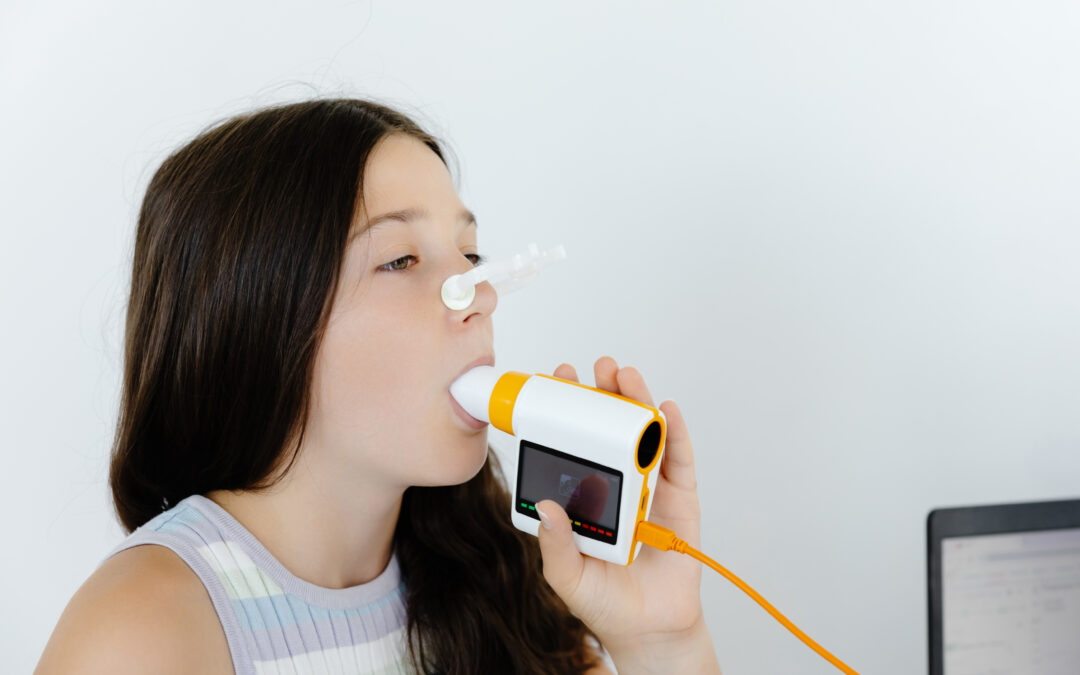
Fractional exhaled nitric oxide (FeNO) is a quick, easy, point-of-care test which measures airway inflammation noninvasively. FeNO measures airway inflammation directly through the patient’s exhaled breath. Asthma patients with higher FeNO, greater than 25 ppb in adults, have been shown to have higher EOS, immunoglobulin E (IgE) and lower lung function, specifically forced expiratory volume in one second (FEV1). It is also noteworthy that many studies do not show correlation between the various biomarkers of inflammation. Correlation between FeNO and blood EOS is an indication of the severity of a patient’s asthma. Patients with both high FeNO and blood EOS may have lower FEV1 compared to patients with normal FeNO and blood EOS.
FeNO and blood eosinophils provide complementary, not interchangeable, insights into T2 inflammation through different pathways. Evaluating both can support greater diagnostic accuracy and help guide treatment selection, particularly when results are inconsistent. The goal is not to identify a single superior test, but to build a more complete picture of each patient’s asthma.
Author:
Heather Murgatroyd, BA, RRT, CPFT, AE-C
Senior Clinical Specialist
Methapharm Respiratory
References
- Alving, W.G. Teague. Inflammatory markers to inform treatment of asthma with biologicals: FeNO versus blood eosinophils. J Allergy Clin Immunol Pract. 2023;11(4):1221–1223.
- Airway remodeling meaning: what it is and why it matters. Medical Health Zone. Published July 19, 2026.
- O. Al Ghobain, A.S. Alsubaie, W.A. Aljumah, et al. The correlation between fractional exhaled nitric oxide (FeNO), blood eosinophil count, immunoglobulin E levels, and spirometric values in patients with asthma. Cureus. 2023;15(2):e35289.
- Fan, Y. Wen, Y. Yang, W. Li, Z. Deng, Q. Huang. The relationship of systemic inflammatory index with asthma in adults: a retrospective cross-sectional study. J Int Med Res. 2025;53(11):1–16.
- Hirano, K. Matsunaga. Measurement of blood eosinophils in asthma and chronic obstructive pulmonary disease. Intern Med. 2023;62(1):21–25.