
Is Spirometry Enough to Diagnose Asthma?
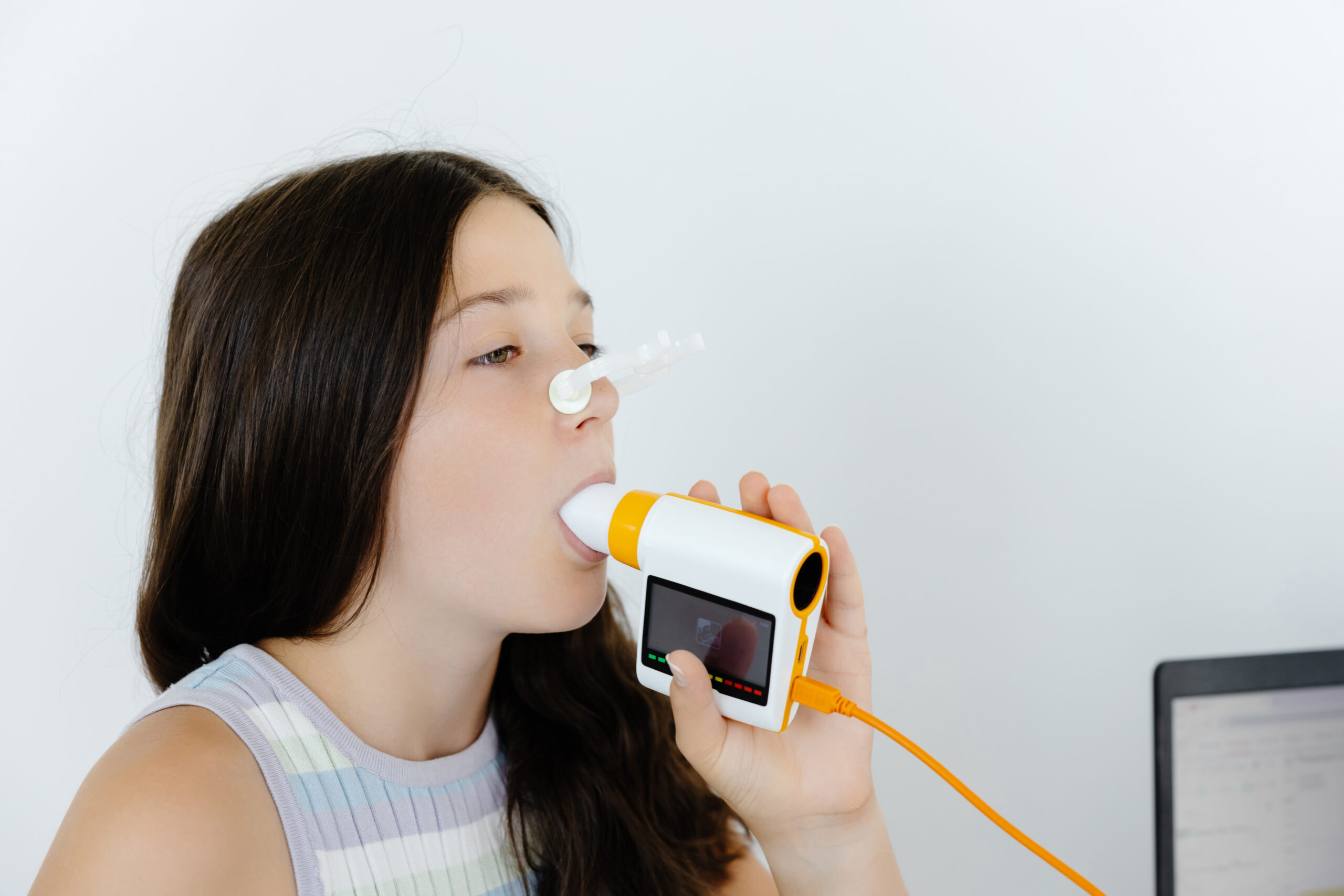
Diagnosing asthma relies on several key items. The patient’s history of symptoms, physical, spirometry, assessment of airway inflammation and airway hyperresponsiveness (AHR). None of these in isolation is enough to properly diagnose asthma. Spirometry with pre and post bronchodilator responsiveness (BDR) is a mainstay of asthma diagnosis. However, only relying on spirometry does not complete the picture of what is going on with the patient. Spirometry does not directly measure airway inflammation or AHR. Achieving repeatable, reproduceable spirometry results is dependent not only on patient effort but also highly skilled coaching by the individual administering the test. It is not enough to simply give instructions as to how to perform the maneuver. The technologist needs to coach the patient through every step until each maneuver is complete. Thus, comprehensive technologist training, whether they are a Respiratory Therapist, Medical Assistant, Nurse, or Physician is essential. The American Thoracic Society’s 2019 spirometry guidelines state “operator training and attainment and maintenance of competency must be integrated in any spirometry testing service.”1 Further, an article by Ruppel and Enright published in Respiratory Care, 2012 states one of the key determinants in obtaining high-quality pulmonary function outcomes relies on a motivated technologist to help elicit the best performance from a patient.
It is important to recognize the shortcomings of spirometry because it is such a mainstay in asthma diagnostics. When assessing BDR, a question to ask is what do the results mean? A positive response, defined as a meaningful increase in the patient’s FEV1 after bronchodilator administration, demonstrates variable airflow limitation and supports an asthma diagnosis. However, if the patient does not show BDR it does not exclude asthma. In a study from 2020, 500 individuals with a negative bronchodilator test for asthma, underwent a methacholine challenge to assess AHR, a hallmark symptom of asthma.2 215 (43.0%) had a positive MCT. This study showed a significant portion of individuals with a high pretest probability of asthma had negative spirometry with pre/post bronchodilator testing but had a positive methacholine challenge. Interestingly, 38% of the patients had no airflow limitation during pre-bronchodilator spirometry and a responsiveness of <5% but had a positive methacholine challenge. This demonstrated this importance of pursuing additional objective testing when diagnosing asthma. A combination of tests including spirometry, bronchoprovocation, and measurement of airway inflammation can be utilized to diagnose asthma with greater accuracy.
It is common to assess BDR once rather than repeatedly to even though it has been demonstrated that it can show day-to-day variability. BDR in patients receiving treatment ranges from 18-30%. Persistent BDR contributes to lower lung function and increased symptom burden for patients. BDR can diminish over time, when using inhaled corticosteroid therapy (ICS) and so it has been proposed that BDR should be considered a treatable trait in chronic airways disease rather a key diagnostic tool for asthma.3
When assessing a patient for asthma, it is important to recognize that each diagnostic test provides distinct yet complementary information. Spirometry evaluates airflow, bronchoprovocation testing—such as a methacholine challenge—assesses airway hyperresponsiveness, and fractional exhaled nitric oxide (FeNO) measures airway inflammation. Neither spirometry nor the MCT provide direct measurement of airway inflammation. In a 2019 study of 194 untreated patients, 96% were identified as asthmatic after an MCT and only 17% showed significant BDR.4
Ultimately, no single test captures the full complexity of asthma. Combining clinical history with well-performed spirometry, bronchoprovocation testing, and assessment of airway inflammation provides a more complete picture and supports a more accurate, confident diagnosis.
Author:
Heather Murgatroyd, BA, RRT, CPFT, AE-C
Senior Clinical Specialist
Methapharm Respiratory
References:
- L. Graham, I. Steenbruggen, M.R .Miller, et al. Standardization of Spirometry 2019 Update: An Official American Thoracic Society and European Respiratory Society Technical Statement. American Journal of Respiratory and Critical Care Medicine. 2019;200(8):e70-e88. doi:10.1164/rccm.201908-1590ST
- Selvanathan, S.D. Aaron, J.R. Sykes, et al. Performance Characteristics of Spirometry With Negative Bronchodilator Response and Methacholine Challenge Testing and Implications for Asthma Diagnosis. Chest. 2020 Aug;158(2):479-490. doi:10.1016/j.chest.2020.03.052
- Beasley, R. Hughes, A. Agustí, et al. Prevalence, Diagnostic Utility and Associated Characteristics of Bronchodilator Responsiveness. American Journal of Respiratory and Critical Care Medicine. 2024;209(4):390-401. doi:10.1164/rccm.202308-1436OC
- Louis, N. Bougard, F. Guissard, et al. Bronchodilation Test with Inhaled Salbutamol Versus Bronchial Methacholine Challenge to Make an Asthma Diagnosis: Do They Provide the Same Information? The Journal of Allergy and Clinical Immunology: In Practice. 2019;8:618-625.e8