

Asthma Remission

Remission – the act or process of remitting1
Remit – to lay aside partly or wholly1
Is asthma remission possible? This is a topic currently being investigated in pulmonary circles. There is not a universal definition of asthma remission. Typically, remission includes a high level of control meaning lack of symptoms and exacerbations along with optimal lung function. It may be possible to achieve remission naturally, particularly if the patient has better lung function, mild asthma, disease control, mild airway hyperresponsiveness, has never smoked, among other characteristics. While some individuals may experience spontaneous resolution of their symptoms and enter a period of remission or be said to have “outgrown” their asthma, they may relapse later in life. Why this happens is not completely understood. Research is addressing this phenomenon and asking questions. Why is remission more common in childhood asthmatics? Can it be as common in adult-onset asthmatics? Can treatment induce remission? Is the use of biologic medications for asthma the key to remission or possibly a cure? Curing is different from achieving remission. To be cured is to achieve: absence of symptoms, normal airway function, and airway responsiveness. Along with the absence of airway pathology indicative of asthma and, finally, not needing treatment to maintain the previous. Curing asthma may not be possible currently, but remission, partial or complete, on or in the absence of treatment, very well may be.
Assessing asthma status is required to determine remission. The variables which need to be assessed include symptoms, exacerbation, lung function, and pathology.
When assessing asthma control, practitioners rely on validated asthma questionnaires such as the Asthma Control Questionnaire (ACQ) or Asthma Control Test (ACT). There are several questionnaires to assess asthma status, how, and if, they might be used to assess remission still needs to be determined.
Assessing exacerbations includes identifying emergency room visits, hospitalizations, and unscheduled doctor visits. If oral corticosteroids are used, remission has not been achieved.
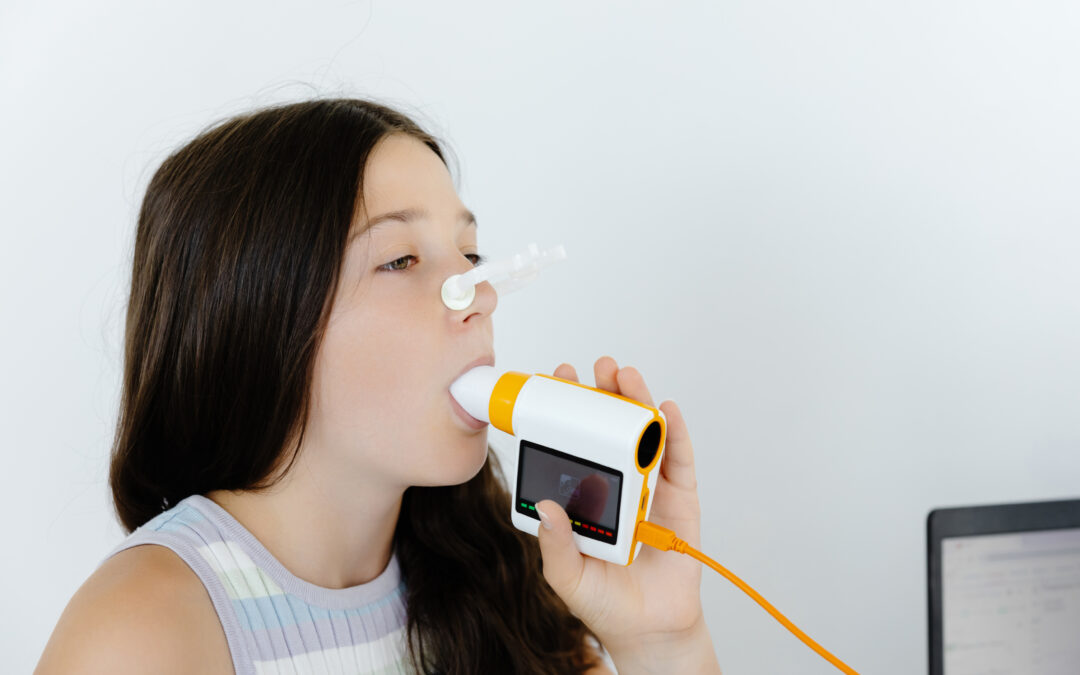
Using spirometry and bronchoprovocation tests like the methacholine challenge to assess lung function and airway hyperresponsiveness along with measures of airway inflammation with fraction exhaled nitric oxide (FeNO) or blood/sputum eosinophils are key factors to assess when determining remission.
Ongoing airway inflammation and remodeling may occur in patients who are considered to be in remission from their asthma. Does persistent airway inflammation and bronchial hyperresponsiveness affect remission? Studies reviewing airway inflammation markers found patients considered to be in remission had lower markers than patients with current active asthma but had higher inflammation than healthy controls. Chronic inflammation causes damage to the airway epithelium resulting in airway remodeling. The mechanism behind airway remodeling is poorly understood and assessing airway remodeling in asthma remission needs to be studied as to how and why, it continues. There are no treatments currently targeted at airway remodeling and current anti-inflammatory treatments do not directly stop airway remodeling from occurring.
Do the current treatments for asthma contribute to remission? Inhaled corticosteroids (ICS) generally reduce symptoms, exacerbations and contribute to improved lung function, especially in mild to moderate asthmatics. It is not clear if their use or in combination with long acting beta2 agonists effect disease progression. Biologic medications currently target inflammatory markers seen in T2, or T2 high, asthma including IL-4, IL-5, IL-13, and IgE. The biologics may indeed provide remission in some cases. Continuing airway inflammation may contribute to relapse in asthma, so on going treatment with a biologic medication may help to prolong remission and prevent a relapse. The biologics are currently applied to severe asthma, however there may be benefit to earlier introduction for mild or moderate asthma to hinder airway remodeling and lung function decline. This requires further evaluation as it is not clear if biologics can help improve airway structure. There is data to support the use of azithromycin, which reduces exacerbations and inflammation associated with asthma. However, it has undesirable side effects which may limit its use.
The complexity and heterogeneity of asthma create challenges in researching remission. Differences in study populations, study design, mixing adult and child subjects, and so on. An internationally accepted definition of remission and its components is essential. Including this in asthma guidelines as a treatment goal supported by research will continue to bring us closer to asthma remission.
Author:
Heather Murgatroyd, BA, RRT, CPFT, AE-C
Senior Clinical Specialist
Methapharm Respiratory
References
- Merriam-webster.com
- Thomas, V.M. McDonald, I.D. Pavord, et al. Asthma remission: what is it and how can it be achieved? Eur Respir J. 2022;60:2102583. doi:10.1183/13993003.02583-2021.